
Sustainability and Recycled Polymers: What rPET and rPP Can Actually Deliver
A technical read on rPET and rPP: mechanical versus chemical recycling, EFSA-approved processes, PPWR targets…
ExploreInsights
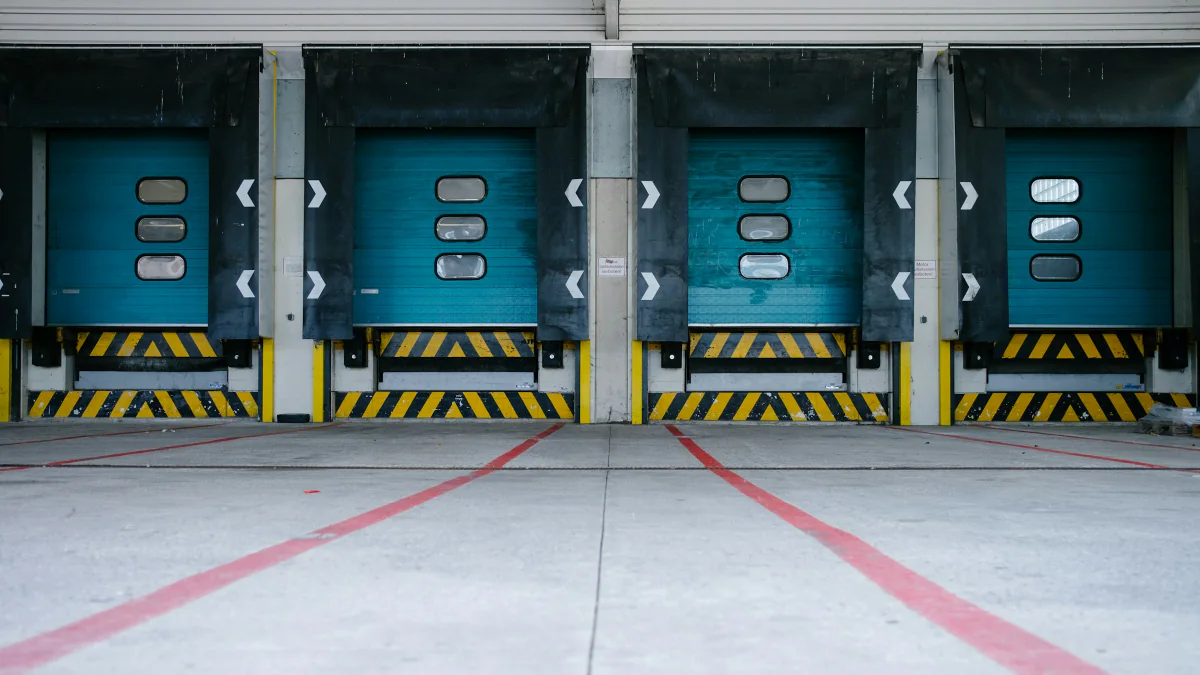
From duty deferral and working capital to demurrage, FIFO discipline in polymer storage and lot traceability: the side of the supply chain that rarely gets discussed.
In plastic raw material trading, price gets discussed and logistics does not. Yet a converter's real cost is not set by the price per tonne. It is set by when the material reaches the line and in what condition. A container stuck at the port, a big bag that has picked up moisture, a lot that can no longer be traced: each erases the few dollars per tonne you negotiated. This article covers what a bonded warehouse does, how it changes the customs and tax position, and what disciplined polymer storage looks like.
A bonded warehouse is a customs-supervised facility where goods are stored before import duties are paid. The cargo is physically in the country but has not yet entered free circulation. Customs duty, VAT and any additional levies fall due only when the goods are withdrawn, and only on the quantity withdrawn.
The cash flow consequence of that single rule is significant. Instead of paying the full duty on a 500-tonne shipment at once, a converter can draw 80 to 100 tonnes a month and align the fiscal burden with production and collections. Working capital is not locked into inventory. Goods held under bond can also be re-exported: material redirected to a third country never triggers import duty at all. Where demand visibility is poor, that option value alone justifies the arrangement.
Turkish customs legislation splits bonded warehouses into general and private categories, with sub-types defined by who bears responsibility:
For a distributing raw material supplier, a Type A general warehouse is usually the right structure. It allows many customers to draw from different lots at different times. Tacirler Antrepo performs exactly that function at Hastane Mah. 29 Mayıs Cad. No:40, Hadımköy (+90 212 771 07 90). The Topkapı warehouse at Maltepe Cad. No:10 provides a second layer for fast intra-city dispatch of goods already in free circulation.
A bill of lading is issued at the load port, the vessel arrives at Ambarlı, Gemlik or Mersin, containers are discharged, a warehouse declaration is lodged and the cargo enters the bonded area. From that point the clock is running.
Two cost lines get conflated but are not the same. Demurrage accrues daily when a container stays beyond the free time granted by the carrier. Storage is the charge for occupying warehouse space. Free time is typically seven to fourteen days, and a missing document or a pending laboratory analysis will consume it quickly. On a twenty-container parcel, a few days of delay moves the landed cost per tonne by a visible margin.
What prevents it is unglamorous: the bill of lading, certificate of origin, certificate of analysis and invoice complete before the vessel berths. Assembling paperwork after arrival is a decision to pay demurrage.
Bonded stock creates a buffer between supplier and manufacturer. Under a consignment model the material is physically in Türkiye, but ownership and the tax burden transfer only at the moment of withdrawal. That produces three concrete effects on production planning:
The model demands discipline in return. Consignment stock that is not fed by realistic drawdown forecasts becomes dead inventory. Sharing a monthly withdrawal plan with the supplier is a precondition, not a courtesy.
Packaging format dictates warehouse operation. A 25 kg sack is stretch-wrapped on a pallet and stacked manually or by palletiser; it splits easily into small parcels but is labour-intensive. Big bags of 1,000 to 1,250 kg need forklifts and lifting frames and suit line-side feeding stations. Octabins are preferred for engineering plastics and low bulk density grades, but stacking height is limited and they are more moisture-sensitive than sacks.
The critical point for stock integrity is verifying packaging condition at every handling step. A torn big bag is not only lost material, it is a contamination risk. Where several polymer families share a floor, cross-contamination shows up later on the converter's line as gels and black specks.
Polyolefins tolerate moisture. PET, PA6 and PC do not. These hygroscopic resins absorb ambient moisture once packaging is opened, and processing without drying causes hydrolytic degradation: haze in PET preforms, loss of mechanical strength in PA6.
FIFO is not negotiable. Antioxidant and UV additive packages lose effectiveness over time. A lot that has sat for eighteen months will not behave like a fresh one even though it meets the same specification. The layout has to make FIFO physically possible; aisle design should be built around it rather than retrofitted.
Every shipment should map one to one between the producer's lot number and the warehouse stock record. When a quality issue surfaces at a customer, the first question is always the same: which lot, which date, which vessel, which container. If that chain is broken, the recall covers the entire stock. With traceability in place, exposure narrows to a few pallets. The difference in a single incident can exceed a full year of logistics budget.
What matters to a planner is not average lead time but its variance. A chain averaging 20 days with a 12-day deviation demands far more safety stock than one averaging 30 days with a 2-day deviation. That is the real contribution of local bonded stock: less about shortening lead time than about making it predictable. Teriş has imported, distributed and financed plastic raw materials since 1961, and the storage infrastructure at Hadımköy and Topkapı exists to build exactly that predictability.
Related articles
A technical read on rPET and rPP: mechanical versus chemical recycling, EFSA-approved processes, PPWR targets…
Explore
Turkey exports plastics on the strength of proximity and lead time while importing most of its resin. EU pack…
Explore
Buying polymer is a working capital decision as much as a purchasing decision. A practical look at letters of…
ExploreShare your product group and monthly tonnage; our trading team will prepare an offer covering price, lead time and payment options.