
The Role of Bonded Warehousing and Logistics in the Supply Chain
From duty deferral and working capital to demurrage, FIFO discipline in polymer storage and lot traceability:…
ExploreInsights
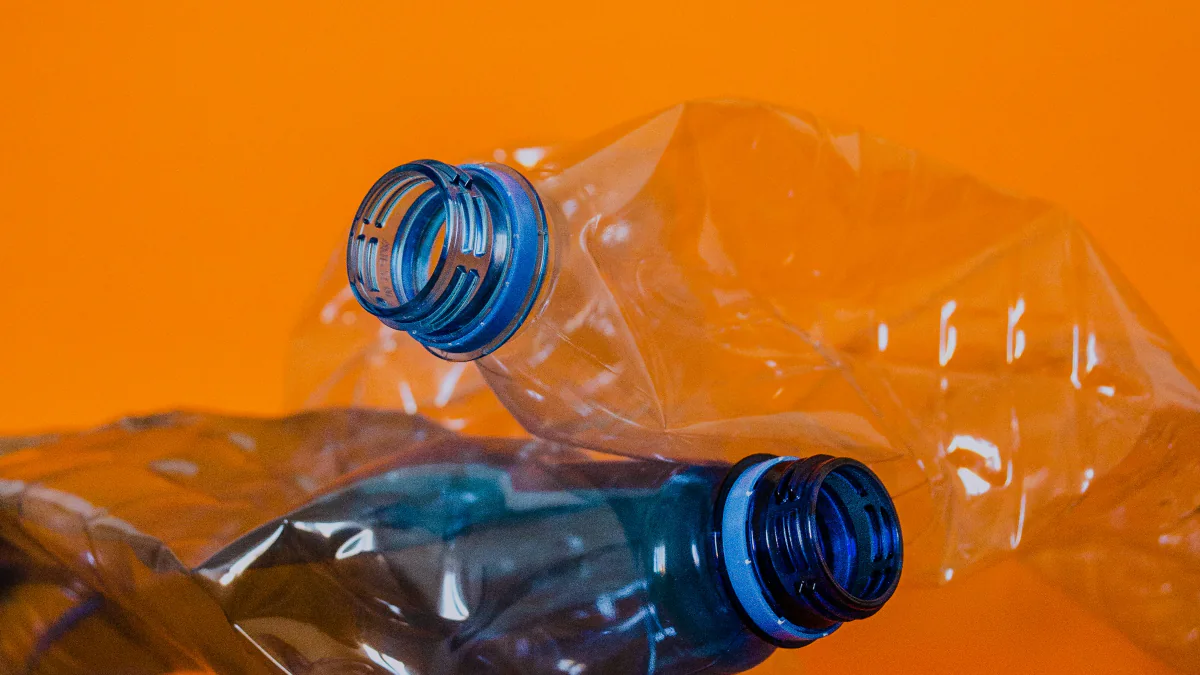
A technical read on rPET and rPP: mechanical versus chemical recycling, EFSA-approved processes, PPWR targets, certification and why recycled resin is not always cheaper.
Recycled polymer has moved from a sustainability statement to a procurement line item. Any packaging or automotive supplier shipping into Europe will soon need a defined share of recycled content in its formulation. Supply, however, has not caught up with that certainty. rPET and rPP remain far less standardised than the virgin grades converters are used to buying. What follows is the technical and commercial picture without the marketing gloss: where recycled resin works today, and where it does not.
Mechanical recycling sorts, washes, grinds and re-pelletises waste. The polymer chain is never chemically rebuilt, only reprocessed. Each loop shortens chains, consumes additive package and shifts colour. In exchange, energy use is low and the scale economics are already established. The overwhelming majority of rPET and rPP volume traded today is mechanical.
Chemical recycling breaks the polymer back to monomer or pyrolysis oil. Glycolysis and methanolysis dominate for PET, pyrolysis for polyolefins. The output is effectively indistinguishable from virgin resin, which removes the colour, odour and food-contact constraints in one step. The obstacle is cost. Capital intensity is high, capacity is limited and unit cost sits well above virgin. Most chemically recycled material is also sold on a mass balance basis, meaning an individual pellet may contain no physically recycled molecule at all; the claim travels through certified bookkeeping. Buy without pinning that distinction down in the contract and it will surface later during a customer audit.
rPET is the most mature recycled polymer on the market. Separate collection gives bottle-to-bottle loops a relatively clean feedstock. For food-contact use, the recycling process itself must have passed EFSA evaluation with demonstrated decontamination performance. The approval attaches to the process, not to a batch of resin. That distinction matters when you request documentation from a supplier.
Technically, intrinsic viscosity is the parameter that governs everything downstream. Bottle applications typically call for 0.72 to 0.80 dl/g, and the IV loss incurred during recycling is recovered through solid state polycondensation. Low-IV rPET produces uneven wall thickness distribution in preform injection and stretch blow moulding. The other control points are acetaldehyde level, yellowness (b* value) and contaminant load from PVC, polyolefins and adhesive residue. Fibre-grade PET tolerates far more variation, which is why weaker feedstock streams generally end up in textile and strapping applications rather than in bottles.
Polyolefins are harder. PP and HDPE waste arrives from packaging, automotive, white goods and agriculture at once. Colour is mixed, additive history is unknown and odour is a persistent complaint. The result is a stream that shifts batch to batch: MFI drift, reduced notched impact strength, a grey-beige colour floor and uncertain thermal stability.
For a converter that variability reduces to one sentence. If you do not want to retune the tool on every lot, you need narrow-specification rPP from a single source. The approaches that hold up in practice are:
There are applications where recycled resin is simply not ready, and pretending otherwise is expensive. Medical devices, direct food-contact polyolefin packaging, thin film requiring clarity, structural parts under sustained load and visible surfaces with tight colour matching all belong in that category today. Forcing the switch there returns as scrap rate and customer complaints.
The EU Packaging and Packaging Waste Regulation introduces staged recycled-content targets for single-use plastic packaging toward 2030 and 2040, with different thresholds for food-contact PET bottles and non-contact packaging. In Türkiye, the Zero Waste Regulation governs collection infrastructure while the recovery contribution fee defines the financial obligation on whoever places packaging on the market. For an exporting manufacturer the practical consequence is straightforward: your European customer's compliance calendar is your reformulation calendar.
A common assumption is that recycled resin always undercuts virgin. In reality, food-grade rPET flake and pellet can trade above virgin PET during demand peaks. The mechanism is simple. Feedstock supply is a function of collection rates and is inelastic in the short term. When virgin prices fall with naphtha and petrochemical margins, collection cost does not follow. rPET therefore needs to be tracked against its own supply and demand curve rather than as a discount to virgin. Annual volume commitments and formula-based pricing offer materially better protection than buying spot.
A recycled-content claim without documentation has no commercial value. Three frameworks carry weight: EuCertPlast, based on facility and process audit; RecyClass, which assesses design-for-recycling and rPET traceability; and ISCC PLUS, which underpins chemical recycling and mass balance claims. Certificate number, scope and validity date belong in the supply contract, and a lot-level declaration should accompany every shipment as standard practice.
Teriş has imported and distributed plastic raw materials since 1961 and marks its 65th year in 2026. Supply security and financing sit alongside technical readiness in any recycled-content transition. Getting the right specification at the right time, under a financing structure that fits the production cycle, is as decisive as the trials on the shop floor.
Related articles
From duty deferral and working capital to demurrage, FIFO discipline in polymer storage and lot traceability:…
Explore
Turkey exports plastics on the strength of proximity and lead time while importing most of its resin. EU pack…
Explore
Buying polymer is a working capital decision as much as a purchasing decision. A practical look at letters of…
ExploreShare your product group and monthly tonnage; our trading team will prepare an offer covering price, lead time and payment options.